Senior Driver Car Insurance in California: What to Expect
Compare Auto Rates for Senior DriversWhy California Senior Rates Don't Follow the National Pattern
California operates under unique insurance regulations that affect how senior drivers experience rate changes differently than drivers in other states. Under Proposition 103, insurers cannot use age as a primary rating factor the way they do in most states, which means you won't see the automatic rate increases at 70 or 75 that are common elsewhere. Instead, California insurers adjust rates based on your individual driving record, annual mileage, and years of continuous coverage with the same carrier.
This regulatory framework creates both advantages and blind spots for senior drivers. Your rates won't spike simply because you reach a certain age milestone, but you also won't benefit from age-based discounts that seniors receive in states like Florida or Arizona. The discounts you do qualify for—mature driver course completion, low mileage, loyalty—require you to document eligibility and explicitly request them at renewal time.
Most California drivers over 65 drive fewer than 7,500 miles annually, down from a national average of 10,000–12,000 miles for working-age adults. If your insurer still has you rated for 12,000+ miles from your commuting years, you're overpaying by an estimated 15–25% on your premium. That calculation error alone costs the average senior driver $18–$35 per month, or $216–$420 annually, across all coverage types.
The Mature Driver Discount Gap: What You're Leaving on the Table
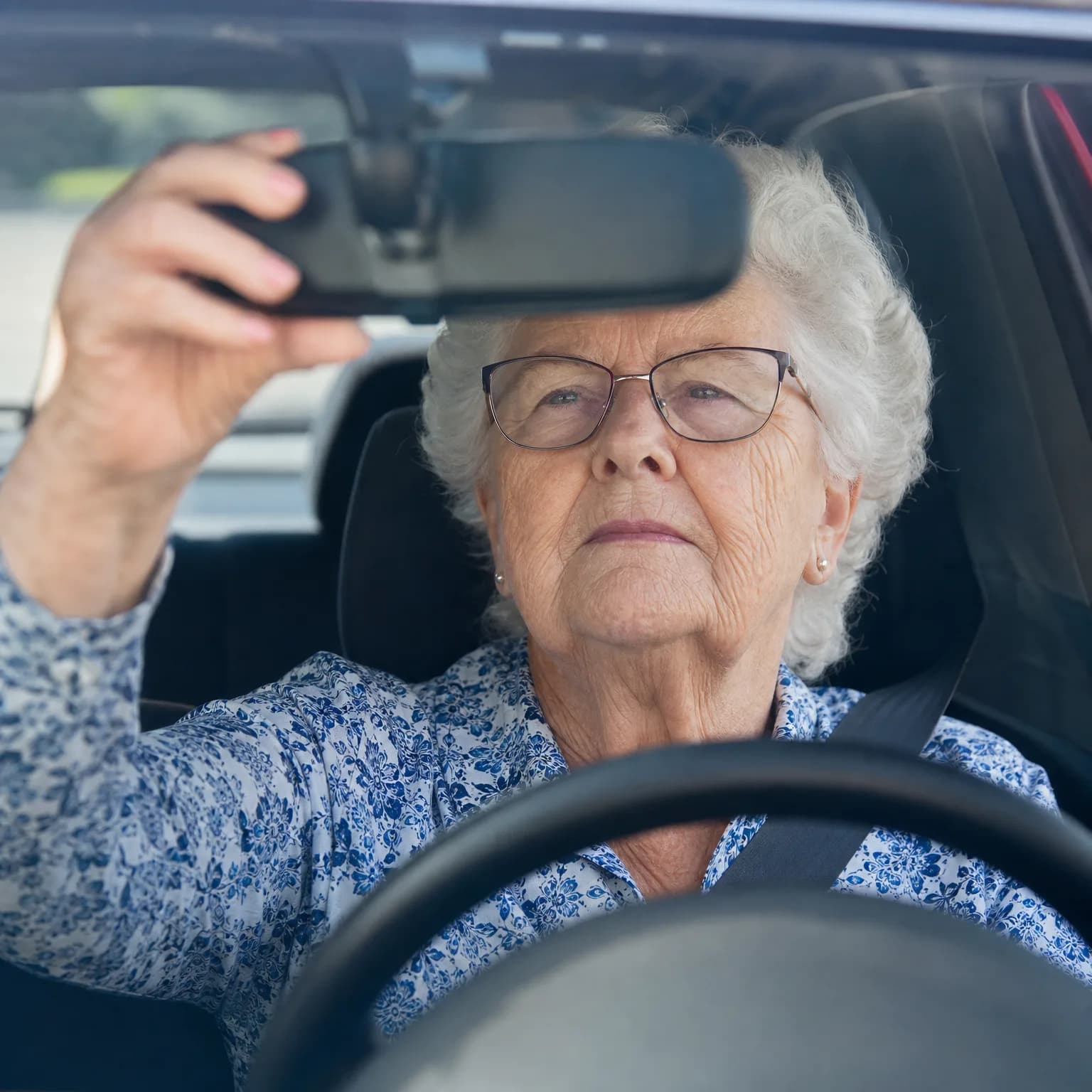
California insurers offer mature driver discounts ranging from 5% to 15% off your total premium if you complete an approved defensive driving course, but fewer than 22% of eligible drivers ever claim it. The discount applies to drivers age 55 and older who complete a DMV-approved course from providers like AARP, AAA, or online platforms certified under California Insurance Code Section 1861.025. The course typically costs $20–$35 and takes 4–6 hours to complete, either in person or online.
The failure to claim this discount isn't about awareness—it's about process friction. Most insurers require you to submit your course completion certificate within 60 days of finishing the class, then manually verify it before applying the discount. If you complete the course but miss the submission deadline or forget to follow up, the discount never appears on your policy. Renewal notices rarely flag missing discounts you qualify for; they simply renew at your current rate.
For a senior driver paying $140/month for full coverage, a 10% mature driver discount saves $168 annually. Over a typical three-year discount period (most courses require renewal every three years), that's $504 in savings for a one-time $25 course investment. The return on investment is 2,016%, yet the majority of California seniors who qualify never initiate the process.
How Coverage Needs Change When Your Vehicle Is Paid Off
Once you've paid off your vehicle, you're no longer legally required to carry comprehensive and collision coverage in California—but dropping it entirely may be the wrong financial decision depending on your car's current value and your savings cushion. The common advice to drop full coverage once a car reaches 10 years old doesn't account for the used vehicle market spike that began in 2021, where many 2013–2016 model sedans and SUVs still carry replacement values between $8,000 and $15,000.
A better framework: compare six months of your combined comprehensive and collision premiums against your vehicle's current actual cash value. If your vehicle is worth $6,000 and you're paying $45/month for comp and collision ($270 over six months), you're paying 4.5% of the car's value every six months just to insure against total loss. At that ratio, most financial advisors recommend shifting to liability-only coverage and self-insuring the vehicle replacement risk.
However, comprehensive coverage alone—which protects against theft, vandalism, fire, weather, and animal strikes—typically costs only $8–$15/month for senior drivers with clean records. Keeping comprehensive while dropping collision is a middle-ground option that makes sense if you park in an area with higher property crime rates or if your vehicle would be expensive to replace but you're an extremely cautious driver unlikely to cause a collision. This hybrid approach saves 60–70% compared to full coverage while maintaining protection against the risks you can't control through defensive driving.
Low Mileage Programs and Usage-Based Insurance: Which Works for Seniors
California insurers offer two distinct programs that reward low-mileage drivers, and understanding the difference determines whether you save money or inadvertently increase your rate. Low mileage discounts are static: you report your annual mileage at renewal, the insurer applies a discount tier (typically 5% for under 7,500 miles, 10–15% for under 5,000 miles), and your rate stays fixed until the next renewal. Usage-based insurance (UBI) uses a tracking device or smartphone app to monitor your actual driving in real time, adjusting your rate every policy period based on miles driven, time of day, braking patterns, and speed.
For senior drivers who consistently drive under 5,000 miles per year and maintain predictable driving patterns, low mileage discounts deliver more reliable savings without the privacy trade-offs or monitoring anxiety that UBI introduces. You report your odometer reading annually, and the discount applies immediately. Major California insurers offering robust low-mileage programs include AAA (up to 10% for under 5,000 miles), CSAA (tiered discounts starting at 7,500 miles), and several regional carriers.
UBI programs can backfire for seniors in unexpected ways. Many programs penalize driving between 11 PM and 4 AM, which affects seniors who drive to early morning medical appointments or return from evening family gatherings. Hard braking events—even justified defensive stops to avoid another driver's mistake—count against your score. If you drive infrequently but sometimes make necessary trips during flagged hours or in heavy traffic requiring sudden stops, UBI may cost you more than a standard policy. The data shows that senior drivers over 70 see UBI savings rates 18–23% lower than drivers in their 50s, primarily due to late-night medical trips and slower reaction times that register as hard braking events.
Before enrolling in any UBI program, request the specific rating factors and penalty thresholds in writing. California law requires insurers to disclose how telematics data affects your rate, but you must ask—it's not automatically provided at enrollment.
Put These Answers to Work on Your Rate
Compare Auto Rates for Senior Drivers
Medical Payments Coverage and Medicare: The Overlap Most Seniors Miss
Medical Payments coverage (MedPay) on your auto policy covers injury-related medical expenses for you and your passengers after an accident, regardless of fault, typically in limits of $1,000 to $10,000. Many seniors carry this coverage because they've always had it, unaware that Medicare Part B already covers accident-related injuries, including those from auto accidents, after you meet your deductible. This creates expensive overlap: you're paying $4–$8/month for MedPay that duplicates coverage you already have through Medicare.
The argument for keeping MedPay despite Medicare coverage rests on two scenarios: immediate cost coverage before Medicare processes claims (MedPay typically pays within days while Medicare can take weeks), and coverage for passengers in your vehicle who may not have health insurance. If you frequently drive grandchildren, friends without Medicare, or other passengers, a $1,000–$2,000 MedPay limit at $3–$5/month provides reasonable guest injury protection.
If you drive alone or only with a spouse who also has Medicare, dropping MedPay and redirecting that $50–$95 annually toward higher liability limits makes more financial sense. California's minimum liability requirement is just $15,000 per person for bodily injury—catastrophically low if you cause a serious accident. Increasing your bodily injury liability from the state minimum of 15/30/5 to a more protective 100/300/100 typically costs $15–$30/month more, but protects your retirement assets far better than a $5,000 MedPay policy that largely duplicates Medicare.

When California Requires Senior Driver Testing and How It Affects Rates
California law allows the DMV to require drivers of any age to take a supplemental driving test if there's reasonable cause to suspect impairment, but unlike some states, California does not mandate automatic retesting at specific age thresholds. Drivers age 70 and older must renew their license in person (not online or by mail) every five years and pass a vision test, but a behind-the-wheel driving test is only required if DMV staff observe concerning behavior during the renewal appointment or if a physician, law enforcement officer, or family member files a Driver Safety report.
This creates a critical misunderstanding: many seniors believe that as long as they pass their five-year renewal, their insurance rates won't change. In reality, your insurance rate is not directly affected by your renewal appointment unless you fail and lose your license. What does affect your rate is the accumulation of violations, at-fault accidents, or lapses in coverage between renewals. A senior driver with a clean record who renews successfully at 75 will not see a rate increase due to the renewal itself.
However, if your renewal triggers a required driving test and you fail, you enter a provisional period where you must complete driver improvement courses or accept license restrictions (daylight driving only, geographic radius limits, no freeway driving). Once restrictions appear on your license, insurers may decline to renew your policy or move you to a high-risk tier. The rate impact is severe: drivers with restricted licenses pay 40–65% more than unrestricted drivers with identical records, and coverage options narrow significantly as standard carriers exit and you're forced into California's assigned risk pool.
Loyalty Penalties and When to Shop Your Rate After 65
California seniors who stay with the same insurer for 10+ years pay an average of 12–18% more than new customers with identical profiles, a pricing phenomenon called the loyalty penalty. Insurers offer aggressive acquisition discounts to attract new customers, then gradually increase rates for existing policyholders through annual renewals that stay just below the threshold that triggers shopping behavior. If your rate increased 4–6% annually for the past five years while your driving record remained clean and your mileage decreased, you're likely experiencing loyalty penalty pricing.
The optimal time to shop your rate is 30–45 days before your renewal date, which gives you time to compare quotes, complete any required mature driver courses, and switch carriers without a coverage gap. Request quotes from at least three carriers: one direct insurer (GEICO, Progressive), one captive agent carrier (State Farm, Allstate), and one independent agent who can quote multiple regional carriers. Provide identical coverage limits and deductibles to each so you're comparing actual rate differences, not coverage variations.
Senior drivers who shop rates every 3–4 years save an average of $340–$520 annually compared to those who remain with the same carrier for a decade or more. The savings come not from generic senior discounts but from accessing new-customer acquisition pricing, capturing mature driver discounts from carriers that weight them more heavily, and eliminating outdated rating factors like commute mileage or multi-vehicle discounts that no longer apply to your household.
Frequently Asked Questions
Does AARP offer car insurance discounts for seniors in California?
AARP does not provide insurance directly—it endorses The Hartford, which offers members a mature driver discount of up to 10% if you complete an AARP Smart Driver course. The course costs $20 for members ($25 for non-members) and satisfies California's mature driver discount requirements at most insurers, not just The Hartford.
At what age do car insurance rates go up for seniors in California?
California law prohibits insurers from using age as a primary rating factor under Proposition 103, so rates don't automatically increase at specific age milestones like 70 or 75 the way they do in other states. Rate changes for senior drivers are based on individual driving record, mileage, and claims history rather than age alone.
Should I keep full coverage on a 12-year-old car if it's paid off?
Compare six months of your comprehensive and collision premiums to your car's current market value. If you're paying more than 8–10% of the vehicle's value per year to maintain full coverage, most financial advisors recommend switching to liability-only or keeping just comprehensive coverage to protect against theft and weather damage while dropping collision.
Can California require me to retake a driving test because of my age?
California does not require automatic retesting at any specific age. Drivers 70+ must renew in person every five years and pass a vision test, but a driving test is only required if DMV staff, a physician, or family member reports specific safety concerns. Your age alone does not trigger mandatory retesting.
How much can a mature driver course save on car insurance in California?
Approved mature driver courses save California drivers age 55+ between 5% and 15% on their total premium, depending on the insurer. For a driver paying $140/month, a 10% discount saves $168 per year—the discount typically lasts three years before requiring course renewal.
Related Articles

Van & SUV Insurance for Seniors: Rates After 65
4/11/2026

NJ Mature Driver Certificate: How to Apply
6/11/2026

Car Insurance for Seniors Driving Occasionally
4/11/2026
CT Senior Driver Insurance: Rates, Discounts & Coverage
4/7/2026
Alabama Senior Driver Insurance: Rates & Coverage After 65
4/7/2026
When Should Senior Drivers Stop? Insurance Signals
4/11/2026