
Senior Driver Car Insurance in Kansas: Rates and Coverage
Compare Auto Rates for Senior DriversWhy Kansas Senior Drivers See Rate Changes After 65
Kansas auto insurance rates for senior drivers typically remain stable or even decrease between ages 65 and 70, averaging $95–$135/mo for full coverage depending on location and driving history. After age 70, most carriers begin incremental rate adjustments, with increases of 8–15% common between ages 70 and 75, and steeper jumps of 15–25% after 75. These increases occur even with clean driving records because insurers use actuarial tables that correlate age with claim frequency, not your individual history.
The timing matters because Kansas has no state-mandated senior discount requirements. Unlike some neighboring states that require insurers to offer mature driver discounts, Kansas leaves discount programs entirely to carrier discretion. This means your current insurer may raise your rates at 72 while a competitor actively markets senior-specific programs — but neither will tell you to switch.
Most Kansas seniors on fixed incomes first notice rate changes at annual renewal, often after decades with the same carrier. A driver paying $110/mo at age 68 may see $127/mo at 73 and $155/mo at 78, with no accidents or violations to explain the 41% total increase. Understanding that these increases are standard industry practice — not a reflection of your driving — helps you evaluate whether your current coverage still makes financial sense.

Mature Driver Discounts Kansas Insurers Won't Automatically Apply
The largest missed savings opportunity for Kansas senior drivers is the mature driver course discount, offered by most major carriers but rarely applied without explicit policyholder request. Completing an approved defensive driving course — typically 4–8 hours, available online or in-person through AARP, AAA, or the Kansas Department on Aging — qualifies drivers 55 and older for discounts ranging from 5% to 15% on most coverage types. For a senior paying $120/mo, a 10% discount saves $144 annually, yet the course certificate must be submitted to your insurer within 30 days of completion to trigger the discount.
Kansas insurers process these discounts manually, not automatically. Your carrier will not notify you when you become eligible at 55, will not remind you when your three-year certification expires, and will not apply the discount retroactively if you submit documentation late. The renewal notice may mention discount availability in fine print, but it won't calculate your potential savings or provide enrollment links.
Beyond course completion, Kansas seniors commonly qualify for low-mileage discounts (typically 5–12% for under 7,500 annual miles), multi-policy bundling (10–25% when combining auto and home), and vehicle safety feature credits (up to 10% for anti-lock brakes, airbags, and anti-theft systems). None of these appear automatically — each requires you to contact your agent, provide documentation, and confirm the discount appears on your next billing statement. Seniors who systematically request every applicable discount typically reduce premiums by $200–$400 annually compared to those who simply renew without inquiry.

Coverage Decisions for Paid-Off Vehicles in Kansas
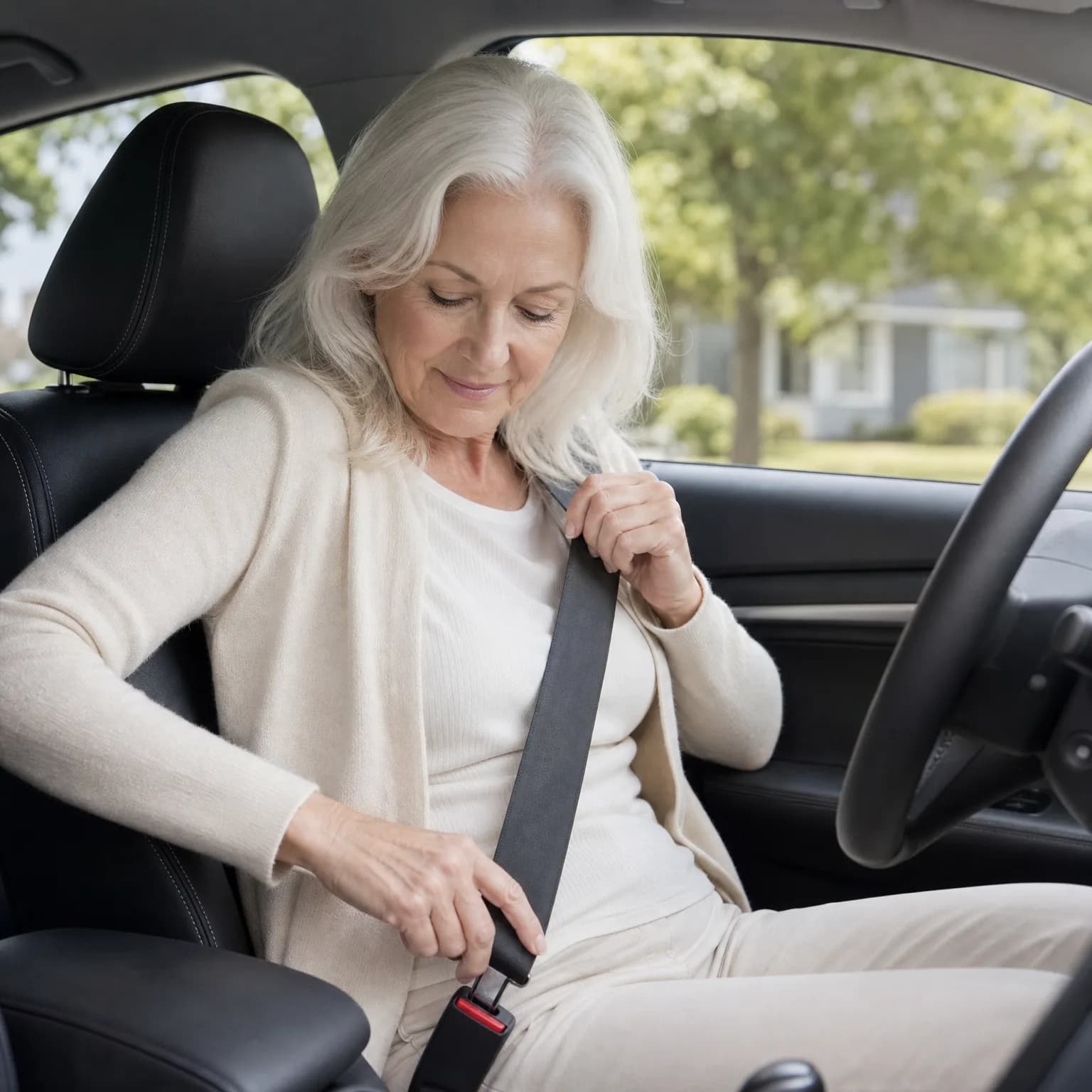
Once your vehicle is paid off — a reality for most Kansas seniors driving cars they've owned 5–10+ years — the decision to maintain comprehensive and collision coverage becomes purely financial rather than lender-mandated. A 2015 sedan worth $6,500 with a $500 deductible provides maximum collision payout of $6,000, while comprehensive and collision together might cost $45–$65/mo or $540–$780 annually. If the vehicle's value drops below 10 times your annual premium for these coverages, you're effectively self-insuring at a premium.
Kansas requires only liability insurance with minimum limits of 25/50/25 ($25,000 per person for bodily injury, $50,000 per accident, $25,000 for property damage). Dropping comprehensive and collision while maintaining liability — often called "liability-only" coverage — typically costs $35–$55/mo for senior drivers with clean records, compared to $95–$135/mo for full coverage. The $60–$80/mo savings ($720–$960 annually) can exceed the vehicle's depreciation, making liability-only coverage mathematically sound for older vehicles.
However, liability-only coverage means you receive nothing if your vehicle is totaled in an at-fault accident, stolen, or damaged by hail — common in Kansas. Before dropping comprehensive coverage, consider your ability to replace the vehicle from savings without financial strain. If losing the vehicle would force you to finance a replacement or significantly impact your budget, maintaining comprehensive coverage at $20–$30/mo provides catastrophic protection. Collision coverage can often be dropped independently if you're primarily concerned about weather damage and theft rather than at-fault accidents.
How Medicare Interacts with Medical Payments Coverage in Kansas
Most Kansas seniors over 65 already have Medicare Parts A and B, which cover medical expenses from auto accidents just as they would any other injury. This creates a common question: do you still need Medical Payments coverage (MedPay) on your auto policy? MedPay pays medical bills for you and your passengers regardless of fault, typically in amounts of $1,000–$10,000, and costs $3–$12/mo depending on the coverage limit.
Medicare will cover your medical treatment after an auto accident, but it doesn't cover your passengers, and it may place a lien on any settlement you receive from the at-fault driver to recover what it paid. Medical Payments coverage pays immediately without determining fault, covers your deductibles and co-pays that Medicare doesn't, and extends to anyone riding in your vehicle — important if you regularly transport a spouse, grandchildren, or friends. For Kansas seniors, maintaining MedPay at $2,000–$5,000 costs $5–$8/mo and fills gaps Medicare leaves open.
The coverage becomes particularly valuable if you or your spouse has Medicare Advantage rather than traditional Medicare, as Advantage plans often have network restrictions that complicate accident-related care. MedPay pays without network limitations and without requiring coordination of benefits. For the modest cost, most Kansas seniors find that keeping MedPay at a $2,000–$5,000 level provides practical protection that complements rather than duplicates Medicare.

Put These Answers to Work on Your Rate
Compare Auto Rates for Senior Drivers
What Kansas Seniors Should Know About Uninsured Motorist Coverage
Kansas does not require uninsured motorist (UM) coverage, but approximately 9–11% of Kansas drivers operate without insurance despite the state's mandatory coverage law. This means roughly 1 in 10 vehicles you encounter has no insurance to pay for your injuries or vehicle damage if that driver causes an accident. UM coverage protects you when an at-fault driver has no insurance or insufficient limits to cover your losses.
For Kansas seniors, UM coverage costs $8–$18/mo for limits matching your liability coverage (25/50 minimum, though 100/300 is more protective). If an uninsured driver totals your vehicle or causes injuries requiring medical care beyond what Medicare covers, UM coverage responds as if the at-fault driver had proper insurance. Without it, your only recourse is suing the uninsured driver personally — a process that rarely recovers meaningful compensation from someone who couldn't afford insurance in the first place.
Uninsured motorist coverage also includes underinsured motorist protection in most Kansas policies, covering the gap when an at-fault driver has insurance but not enough to cover your actual damages. A driver with minimum 25/50 limits who causes an accident resulting in $75,000 in medical bills leaves a $25,000 gap per person that your underinsured motorist coverage would fill. Given the modest cost and high percentage of uninsured Kansas drivers, most senior drivers find UM coverage worth maintaining even on older vehicles where they've dropped collision.
Kansas License Renewal Requirements for Senior Drivers
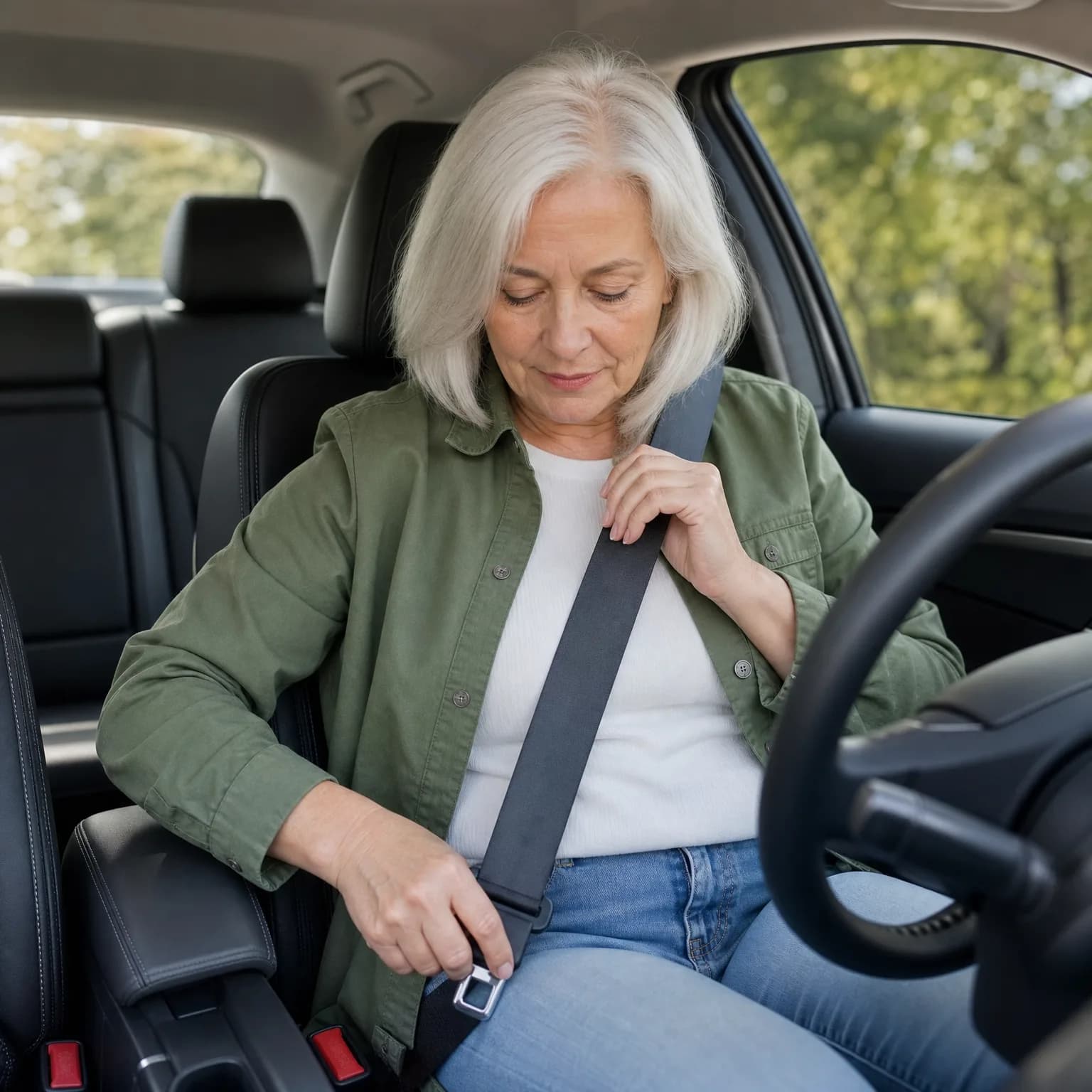
Kansas driver's licenses for seniors age 65 and older remain valid for six years, with renewal required by your birthday in the expiration year. Unlike some states that mandate vision tests or in-person renewal at specific ages, Kansas allows online or mail renewal for most seniors unless your license has been expired more than one year. The renewal fee is $26 for a six-year license, unchanged regardless of age.
Kansas does not require road tests or additional medical certifications based solely on age. If the Department of Revenue receives a medical report from a physician or a concern from law enforcement or family, they may require a vision test, written test, or driving test, but this is incident-driven rather than age-triggered. Vision standards remain 20/40 in at least one eye with or without correction, the same requirement you've met at every previous renewal.
Seniors can renew up to one year before expiration, and Kansas offers a reminder postcard approximately 60 days before your license expires. If you prefer in-person renewal — common for those who want to update their photo or confirm all information is current — any Kansas driver's license office processes renewals without appointment, though wait times vary by location and time of day. Maintaining an active Kansas license with current address information ensures your insurance remains valid, as carriers verify license status at renewal and after any claim.
Finding Lower Rates as a Kansas Senior Driver
Kansas auto insurance rates vary significantly by carrier, with the same 70-year-old driver receiving quotes ranging from $85/mo to $160/mo for identical coverage depending on which company they contact. Unlike younger drivers whose rates cluster more tightly, senior driver pricing reflects each carrier's specific underwriting approach to age-related risk, creating wider spreads and greater savings potential for those who compare.
Regional and local insurers in Kansas — including Farm Bureau Financial Services, Kansas Farm Bureau, and Farmers Mutual — often price senior drivers more competitively than national carriers, particularly in rural counties. These carriers weight factors like tenure, bundling, and claims history more heavily than age alone. A Kansas senior who has insured their home and auto with the same regional carrier for 15+ years may pay 20–30% less than a new customer at a national brand, even with identical coverage and driving records.
The most effective rate reduction strategy combines comparison shopping every 2–3 years with systematic discount requests at your current carrier. Before switching, ask your existing insurer to audit your policy for all applicable discounts — mature driver course completion, low mileage, safety features, multi-policy bundling, and paid-in-full discounts. If your current rate with all discounts applied still exceeds competitor quotes by more than 15%, switching makes sense. Request quotes for identical coverage limits to ensure valid comparison, and verify that any new carrier offers the same discount programs you'll re-qualify for over the next policy term.
Frequently Asked Questions
At what age do car insurance rates increase for senior drivers in Kansas?
Kansas auto insurance rates typically remain stable or decrease between ages 65 and 70, then increase 8–15% between ages 70 and 75, with steeper increases of 15–25% after age 75. These increases occur even with clean driving records as carriers adjust pricing based on age-related actuarial tables, not individual driving history.
Does Kansas require a driving test for license renewal after age 65?
No, Kansas does not require road tests, additional medical certifications, or vision tests based solely on age. Drivers 65 and older renew their six-year licenses online, by mail, or in person without age-triggered testing unless the Department of Revenue receives a specific medical or safety concern.
Should I drop comprehensive and collision coverage on my paid-off car in Kansas?
If your vehicle's value is less than 10 times your annual comprehensive and collision premium, you're likely paying more in coverage than you could recover in a total loss. Kansas seniors with older vehicles often save $60–$80/mo by switching to liability-only coverage, but should maintain comprehensive if they cannot replace the vehicle from savings without financial strain.
Do I need Medical Payments coverage if I already have Medicare?
Medicare covers your medical treatment after an auto accident, but Medical Payments coverage fills important gaps — it covers your passengers, pays your Medicare deductibles and co-pays, and pays immediately without determining fault. For Kansas seniors, maintaining $2,000–$5,000 in MedPay costs only $5–$8/mo and provides practical protection Medicare doesn't.
How do I get the mature driver discount in Kansas?
Complete an approved defensive driving course through AARP, AAA, or the Kansas Department on Aging (typically 4–8 hours), then submit your completion certificate to your insurance company within 30 days. The discount (typically 5–15%) is not applied automatically — you must request it and provide documentation, and it must be renewed every three years.
Related Articles
Van & SUV Insurance for Seniors: Rates After 65
4/11/2026

NJ Mature Driver Certificate: How to Apply
6/11/2026

Car Insurance for Seniors Driving Occasionally
4/11/2026
CT Senior Driver Insurance: Rates, Discounts & Coverage
4/7/2026

Alabama Senior Driver Insurance: Rates & Coverage After 65
4/7/2026

When Should Senior Drivers Stop? Insurance Signals
4/11/2026