
Senior Driver Car Insurance in Oklahoma: What Changes After 65
Compare Auto Rates for Senior DriversWhy Your Oklahoma Rate Changed at 65 (Even With a Clean Record)
Oklahoma insurers recalibrate risk profiles in five-year age bands, with the first adjustment typically occurring between ages 65 and 70. If you've seen a 12–18% increase despite no accidents or tickets, you're experiencing what most Oklahoma senior drivers face: actuarial repricing based on statewide age-group claims data rather than your individual record. This happens because Oklahoma allows age-based rating adjustments, and carriers apply them at renewal without advance notice beyond the standard rate change disclosure.
The rate curve flattens for most drivers between 65 and 70, then steepens again after 75. A 68-year-old Oklahoma driver with full coverage on a paid-off 2018 sedan might pay $95–$140/mo depending on location and carrier, while the same driver at age 78 could see $125–$180/mo. The increase isn't about your driving — it reflects statistical claims frequency for your age cohort statewide.
You can offset much of this increase through mature driver discounts, but Oklahoma doesn't require carriers to offer them. That means discount availability, course requirements, and credit amounts vary by insurer. Some carriers apply a flat 5% reduction for completing an approved defensive driving course, while others tier discounts by age (10% at 55, 15% at 65) or limit eligibility to specific course providers.
Oklahoma Mature Driver Discounts: How to Actually Get Them
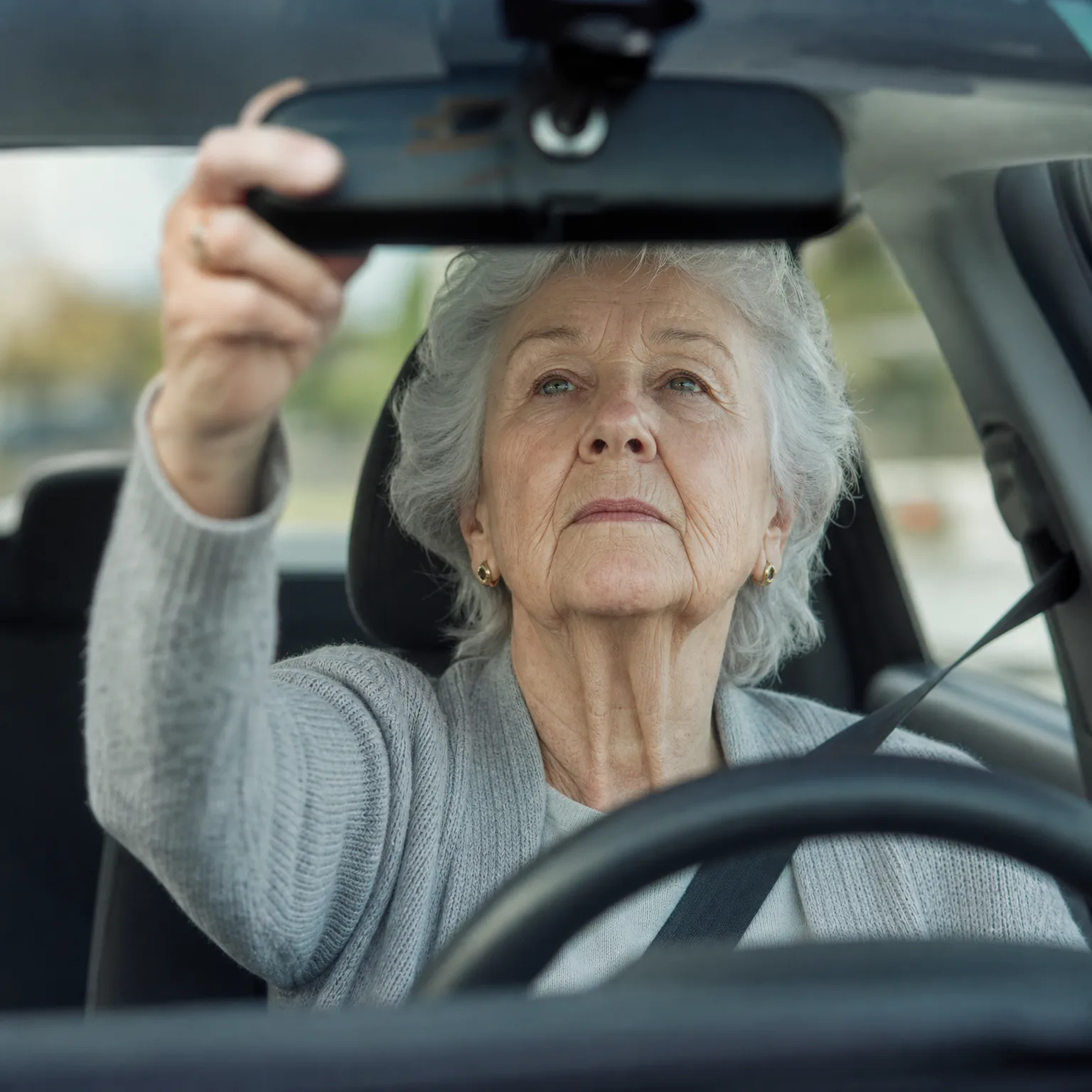
Oklahoma recognizes AARP Smart Driver, AAA Senior Driving, and National Safety Council Defensive Driving II courses for insurance discount purposes, but carrier acceptance varies. Most insurers require an 8-hour initial course (available in-person or online) and a 4-hour renewal every three years. The course costs $20–$35 for AARP members or $25–$45 for non-members, and completion certificates must be submitted directly to your insurer — they don't automatically apply the discount even if you've taken the course.
The average Oklahoma senior driver who qualifies for a mature driver discount but hasn't submitted proof is leaving $180–$320 per year unclaimed. This happens because carriers don't proactively ask about course completion at renewal, and many longtime policyholders assume their insurer already has the information on file. If you completed a defensive driving course five years ago, that credit likely expired — Oklahoma insurers typically require recertification every 36 months to maintain the discount.
To claim the discount: complete an approved course, request a completion certificate (digital or mailed), and submit it to your agent or carrier's customer service line within 30 days. Ask specifically what percentage discount you'll receive and confirm the effective date. Some carriers apply the credit immediately; others wait until your next policy renewal. If your carrier doesn't offer a mature driver discount at all, that's a signal to compare rates with other Oklahoma insurers who do.

Coverage Decisions for Paid-Off Vehicles and Fixed Incomes
If your vehicle is paid off and worth less than $4,000, you're facing the calculation most Oklahoma senior drivers wrestle with: whether comprehensive and collision coverage still makes financial sense. A general guideline is to drop these coverages when the annual premium exceeds 10% of the vehicle's current value. For a 2012 sedan worth $3,200, paying $400/year for comp and collision means you're spending 12.5% of the car's value to insure against damage you might self-fund.
Before dropping coverage, price the replacement scenario. If your vehicle were totaled tomorrow, could you replace it with $3,000–$5,000 from savings without financial stress? If not, keeping comprehensive coverage (which protects against theft, hail, and animal strikes common in rural Oklahoma) might be worth $25–$40/mo even on an older vehicle. Collision coverage is typically more expensive and covers only crash damage where you're at fault — a scenario many experienced senior drivers with clean records rarely face.
What you should never reduce: liability limits and uninsured motorist coverage. Oklahoma's minimum liability requirement is just 25/50/25 ($25,000 per person, $50,000 per accident for bodily injury, $25,000 property damage), but a serious crash can generate six-figure medical claims. Most financial advisors recommend 100/300/100 for drivers with retirement assets to protect. Liability insurance protects everything you've built over decades — your home equity, retirement accounts, and Social Security income — from lawsuit judgments that exceed your policy limits.
Medical Payments Coverage and Medicare: What Oklahoma Seniors Need
Oklahoma doesn't require medical payments (MedPay) coverage, but it fills a specific gap for senior drivers on Medicare. Medicare Part A and B cover accident-related injuries, but not immediately — there's often a billing lag, and you'll face deductibles and copays. MedPay pays immediately after a crash regardless of fault, covering your deductible, ambulance costs, and copays up to your policy limit (typically $1,000–$10,000).
For Oklahoma seniors, $5,000 in MedPay costs roughly $8–$15/mo and covers you and any passengers in your vehicle. It pays before Medicare processes the claim, which matters if you need immediate care or transportation. MedPay also covers you as a pedestrian or bicycle rider struck by a vehicle — scenarios where your auto policy's medical coverage extends beyond just car crashes.
Medicare supplement (Medigap) plans cover some of what Medicare doesn't, but they won't pay your passenger's injuries if you're at fault in a crash. That's where your liability coverage's bodily injury component applies. If you regularly drive friends or family members, confirm your bodily injury limits are high enough to cover multiple passengers' medical costs. Oklahoma law doesn't require you to carry separate passenger medical coverage, but your liability policy's medical payments to others should be at least $5,000 per person.
Put These Answers to Work on Your Rate
Compare Auto Rates for Senior Drivers
Low-Mileage and Usage-Based Programs for Retired Oklahoma Drivers
If you're driving fewer than 7,500 miles annually in retirement, you likely qualify for low-mileage discounts that most Oklahoma insurers don't advertise prominently. These range from 5–20% depending on reported annual mileage, but carriers verify through odometer photos, annual inspections, or telematics devices. Some insurers ask for a single annual odometer reading; others use a mobile app that captures mileage automatically.
Usage-based insurance (UBI) programs like Snapshot, SmartRide, and DriveEasy track not just mileage but driving behavior — hard braking, rapid acceleration, time of day, and speed. For senior drivers with smooth driving habits who avoid rush hour, these programs can deliver 15–30% discounts. The tradeoff: you're sharing real-time driving data with your insurer, and a few hard-braking incidents (even if you're avoiding a crash) can reduce your discount.
Oklahoma's rural geography matters here. If you're driving 40 miles to Tulsa or Oklahoma City twice a month rather than daily commuting, your risk profile is fundamentally different from someone driving 15,000 miles annually in urban traffic. Make sure your insurer knows your actual mileage — many policies default to 12,000–15,000 miles per year unless you request a lower classification. Switching from "standard" to "low mileage" classification can drop your premium $15–$35/mo with no other changes.

When Oklahoma Insurers Non-Renew Senior Drivers (and Your Options)
Oklahoma allows insurers to non-renew policies for reasons beyond accidents or violations, including age-related claims frequency in your rating class. If you receive a non-renewal notice (required 30–60 days before expiration), it doesn't mean you're uninsurable — it means that specific carrier has decided your risk profile no longer fits their book of business. This often happens after a single comprehensive or collision claim by drivers over 75, even if fault wasn't determined.
Your options: shop immediately with other standard carriers, consider Oklahoma Farm Bureau or USAA if you're eligible, or contact an independent agent who can access multiple insurers at once. Don't wait until the non-renewal date to start shopping — a coverage lapse triggers surcharges with your next insurer. If you're struggling to find standard coverage, Oklahoma participates in the national assigned risk plan, but rates are significantly higher (often double standard market premiums).
One at-fault accident after age 70 can increase your Oklahoma premium 25–40% at renewal and remain on your record for three years. But the impact varies by carrier — some insurers penalize first accidents more heavily than others. If you've been with the same company for 15+ years and face a sharp increase after your first claim, that's exactly when to compare rates with competitors who may weight long-term loyalty and overall record more favorably than a single recent incident.
What to Compare When Shopping as an Oklahoma Senior Driver
When comparing Oklahoma car insurance as a senior driver, look beyond the monthly premium. Request quotes with identical coverage limits — 100/300/100 liability, $500 comprehensive and collision deductibles, $5,000 MedPay, and uninsured motorist coverage matching your liability limits. Oklahoma has an uninsured driver rate near 14%, so this coverage protects you when the at-fault driver has no insurance or insufficient limits.
Ask each insurer specifically about: mature driver discounts (and whether they require a course), multi-policy discounts if you bundle home or renters insurance, pay-in-full discounts (typically 5–8%), and whether they offer diminishing deductibles for claim-free years. Some Oklahoma insurers reduce your deductible by $50–$100 for each year without a claim, which can eventually bring your collision deductible from $500 to $100 after several years.
Compare not just price but policy features: rental car reimbursement (covers a rental while your car is being repaired), roadside assistance (towing, lockout service, flat tire changes), and gap coverage if you're still financing. For senior drivers on fixed incomes, the cheapest premium isn't always the best value — a policy that's $12/mo cheaper but requires you to pay a $1,000 deductible instead of $500 could cost you more after a claim you can't easily afford out of pocket.
Frequently Asked Questions
Does Oklahoma require senior drivers to take a driving test to renew their license?
No, Oklahoma does not require road tests or additional written exams for senior drivers at any age. All drivers renew every four years regardless of age, though drivers 65 and older may be required to renew in person rather than online if certain vision or medical flags appear in state records.
Will my Oklahoma car insurance automatically go down when I turn 55 or 65?
No, Oklahoma insurers do not automatically apply age-based discounts. You must complete an approved defensive driving course and submit proof of completion to your insurer to receive a mature driver discount, which typically ranges from 5–15% depending on the carrier.
Can I be dropped by my Oklahoma insurer just for being a senior driver?
Oklahoma insurers cannot non-renew you based solely on age, but they can non-renew based on claims history or overall risk assessment that correlates with age. If you receive a non-renewal notice, you have 30–60 days to find new coverage with another carrier before your policy expires.
Should I keep full coverage on my paid-off car if I'm retired in Oklahoma?
It depends on the vehicle's value and your ability to replace it from savings. If annual comprehensive and collision premiums exceed 10% of your car's current value and you could afford to replace it out of pocket, dropping those coverages may make financial sense. However, never reduce liability or uninsured motorist coverage regardless of your vehicle's age.
Does Medicare replace the need for medical payments coverage in Oklahoma?
No, Medicare covers accident injuries but with deductibles, copays, and billing delays. Medical payments coverage on your auto policy pays immediately after a crash regardless of fault, covering your Medicare deductibles and any passengers' injuries up to your policy limit.
Related Articles
Van & SUV Insurance for Seniors: Rates After 65
4/11/2026

NJ Mature Driver Certificate: How to Apply
6/11/2026

Car Insurance for Seniors Driving Occasionally
4/11/2026

CT Senior Driver Insurance: Rates, Discounts & Coverage
4/7/2026
Alabama Senior Driver Insurance: Rates & Coverage After 65
4/7/2026
When Should Senior Drivers Stop? Insurance Signals
4/11/2026